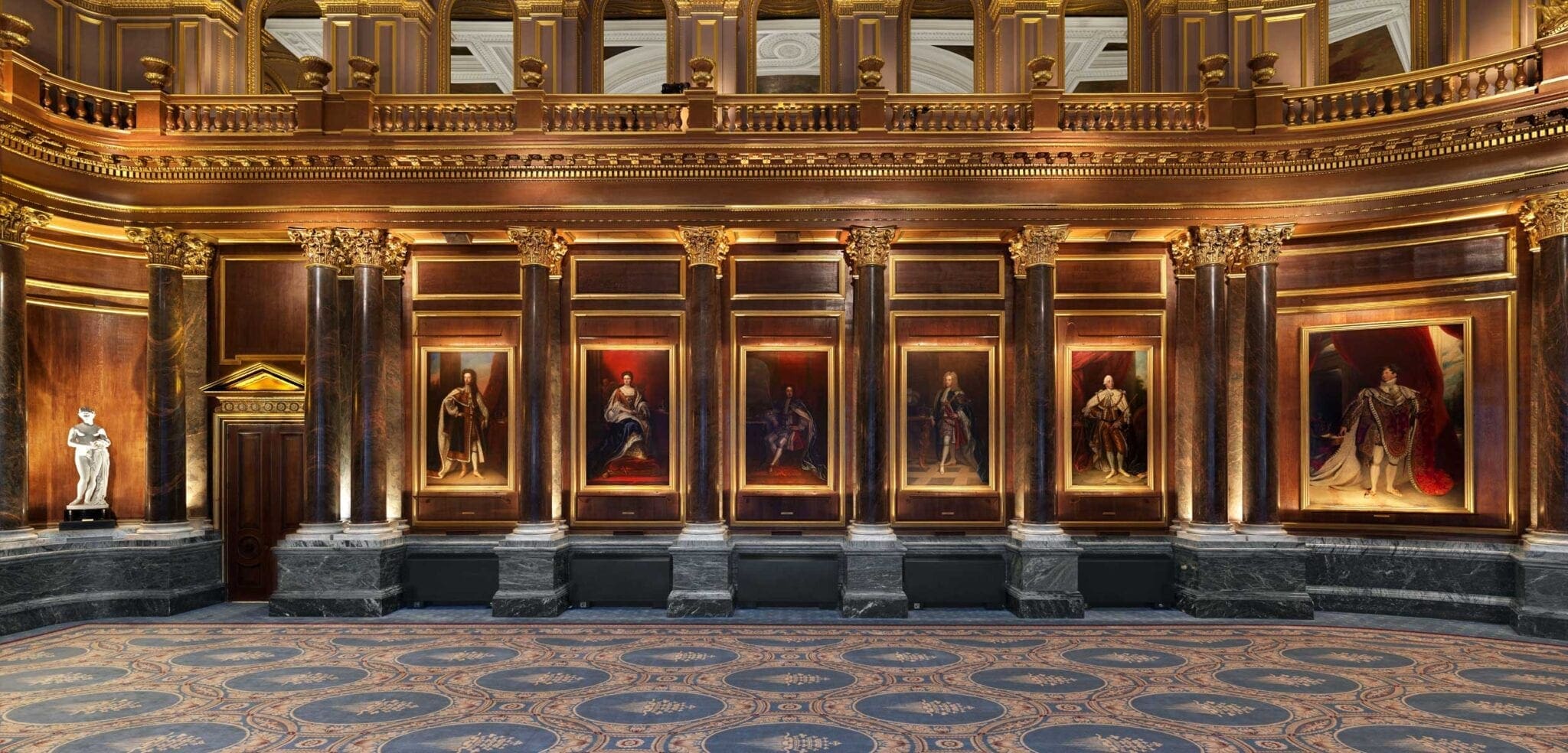
George IIPresented by Past Master Sir William Hammond in 1720By Sir Godfrey KnellerA white marble figure of VenusPurchased by the Company in 1893John GibsonQueen Anne
Presented by Past Master the Rt Hon The Lord Luke KCVO, TD, DL, in 1958By Sir Godfrey KnellerGeorge IIICommissioned by the Company in 1777Sir Nathaniel DanceGeorge IVCommissioned by the Company in 1826Sir Thomas Lawrence PRAWilliam III Presented by Past Master John Watson in 1719John GibsonGeorge IPresented by Past Master Thomas Hollis in 1716Sir Godfrey KnellerThe CarpetThe carpet was installed in the summer of 2015. It was designed by Helen Owen and was woven by the Grosvenor Wilton Company in KidderminsterQueen Victoria
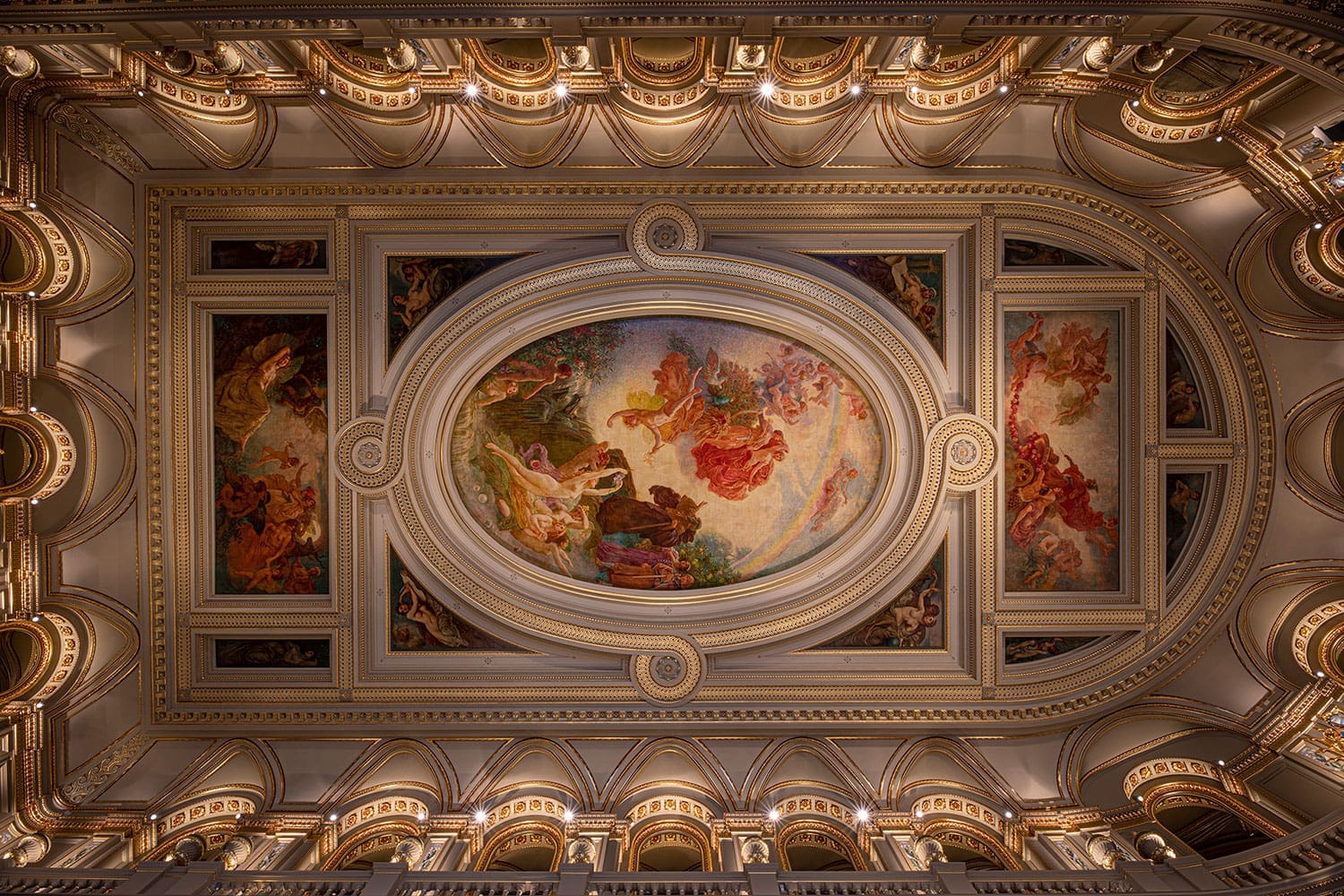
From a portrait by Von Angeli in Windsor Castle. Commissioned by the Company in 1920Copy by HE JamesEdward VIIPresented by Past Master John Barrow in 1911Harold Speed (replica)Designed by Helen OwenWilliam IVFrom a portrait by Sir David Wilkie in Windsor Castle. Commissioned by the Company in 1911Copy by HE JamesThe TempestProspero calling forth and controlling the Spirits of the Elements to celebrate the betrothal of his daughter Miranda and her lover FerdinandA Midsummer Night’s Dream – OberonKing of the Fairies passes in his golden chariot at dawn. The ceiling paintings by Herbert Draper were completed between 1903 and 1910A Midsummer Night’s Dream – TitaniaQueen of the Fairies, lies sleeping while figures flit across the face of the Moon singing to her. Puck is hovering over her head. The ceiling paintings by Herbert Draper were completed between 1903 and 1910Figures representing Sunset and NightThe ceiling paintings by Herbert Draper were completed between 1903 and 1910Figures representing Science, Ethics and LiteratureThe ceiling paintings by Herbert Draper were completed between 1903 and 1910Figures represent the morning hoursThe ceiling paintings by Herbert Draper were completed between 1903 and 1910
The History of
The Livery Hall
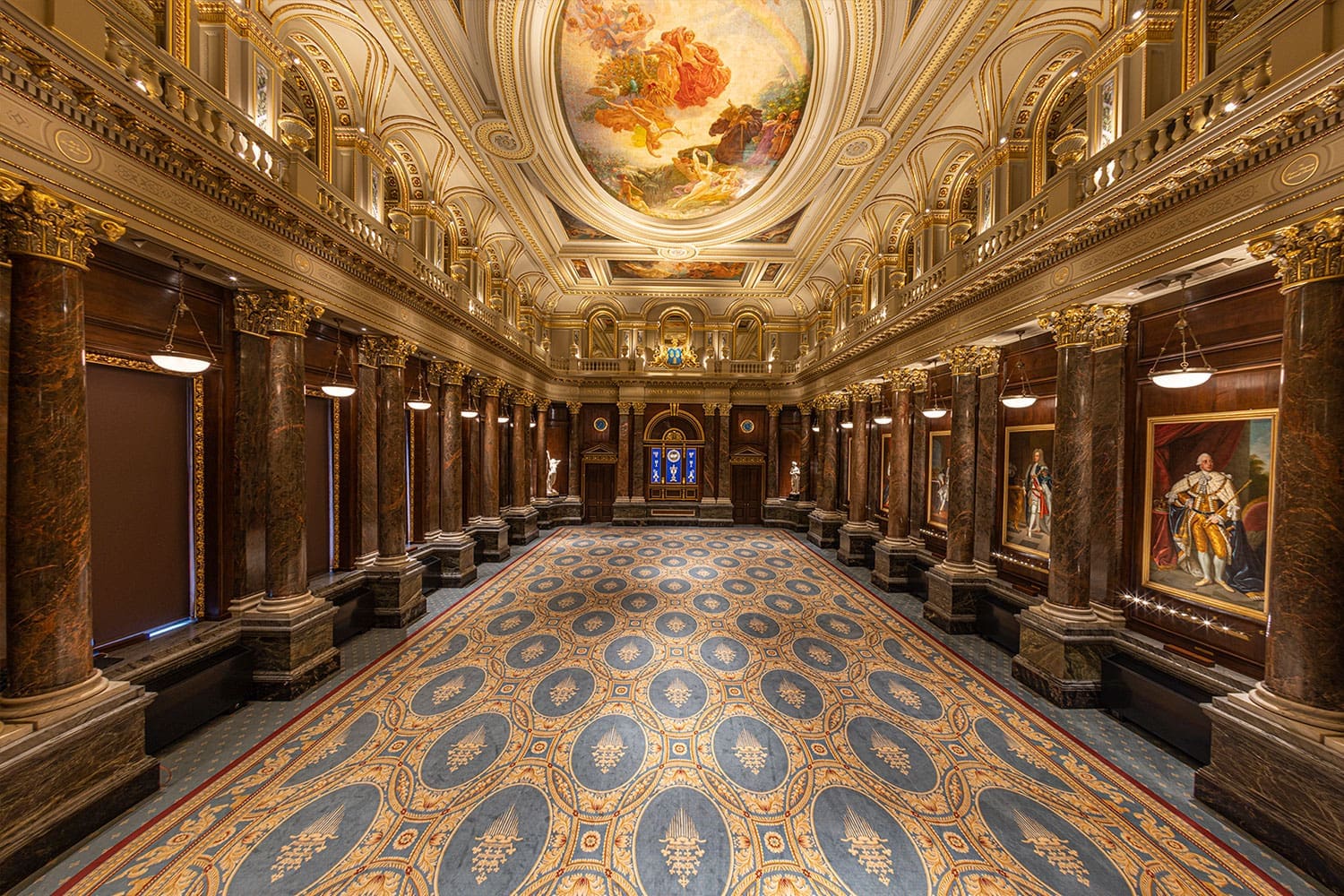
The Livery Hall is the heart of Drapers’ Hall. It is here, over several centuries, that we have entertained our members, affiliates and friends
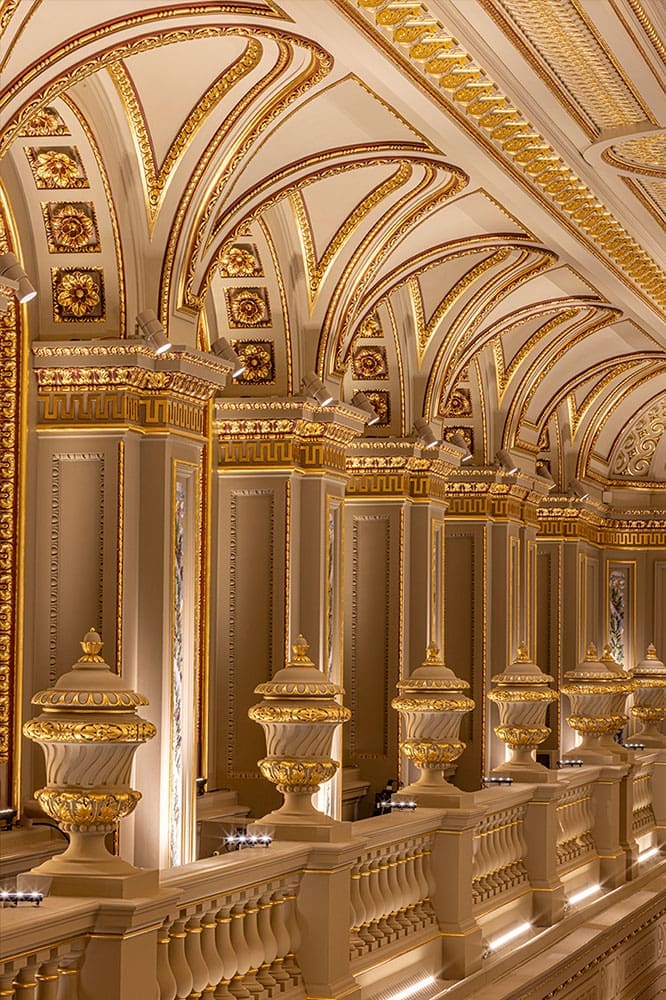
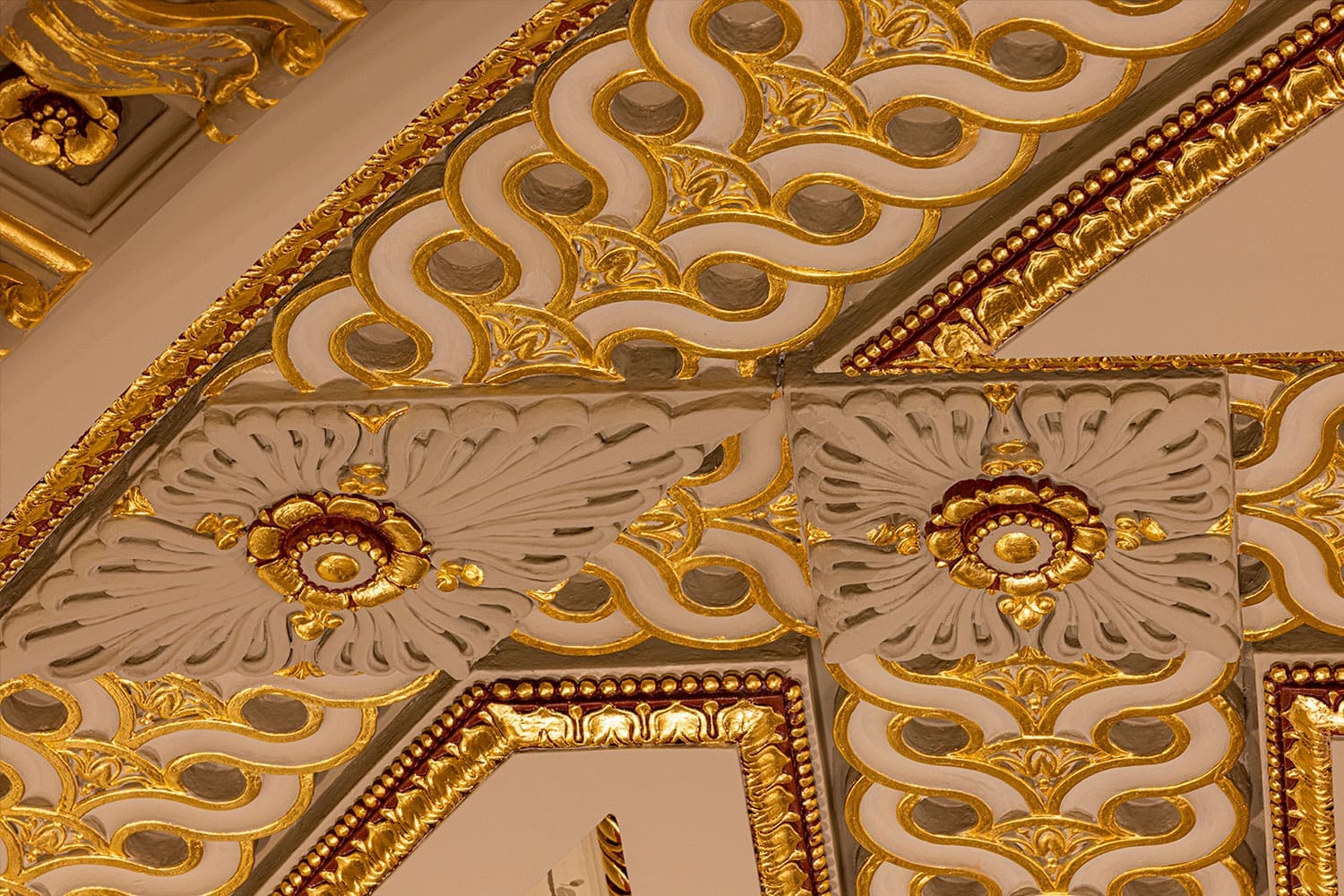
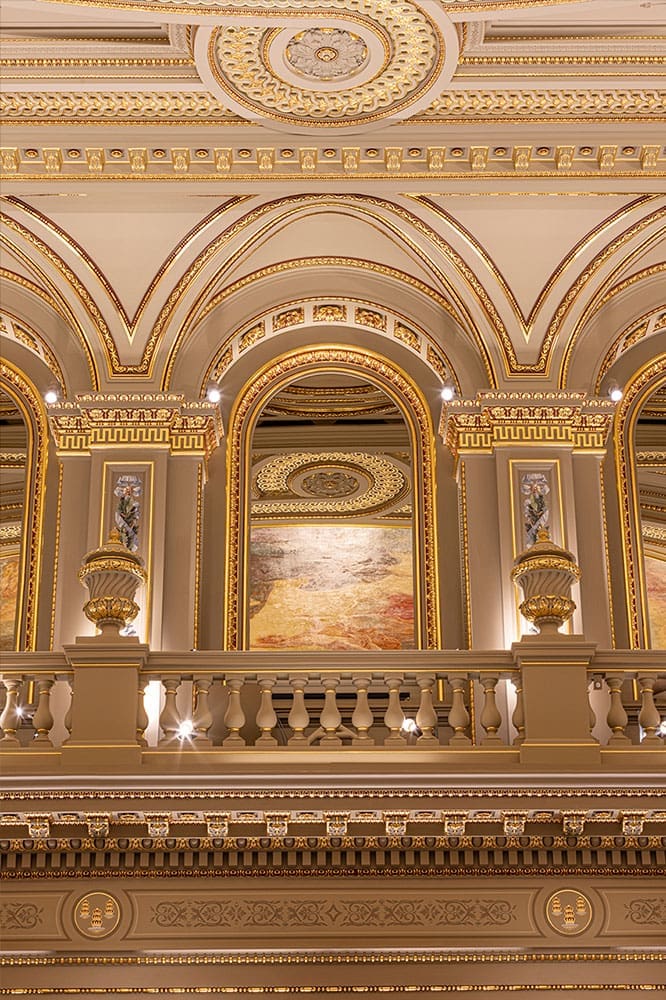
It stands on the eastern side of the Courtyard and was built after the fire of 1772 that damaged a significant portion of Drapers’ Hall. It was enlarged to its present magnificent proportions in the 1860s. The extravagant Victorian decoration and mighty ceiling were modified 30 years later by Sir Thomas G Jackson and in 1903 Herbert James Draper was commissioned to produce the oil on canvas paintings that still dominate the ceiling today. The ceiling suffered extensive damage during World War II in October 1940 since when the room has been redecorated, most recently in 2021. This recent major re-presentation project saw the room and its works of art conserved, and a beautiful new decorative scheme was introduced inspired by the earlier Victorian and Edwardian schemes.
Though out of fashion for much of the 20th century, Draper (whose name is pure coincidence) was one of the most popular and successful painters of mythology and elegant portraits in the later Victorian and Edward period. The Drapers’ Hall ceiling is regarded as one of his greatest achievements with its theme of day moving from dawn to eventide told through scenes from Shakespeare’s The Tempest (in the central oval) and A Midsummer Night’s Dream (in the rectangles at either end). Their colour, beauty and drama retain their brilliancy – just as Draper intended.
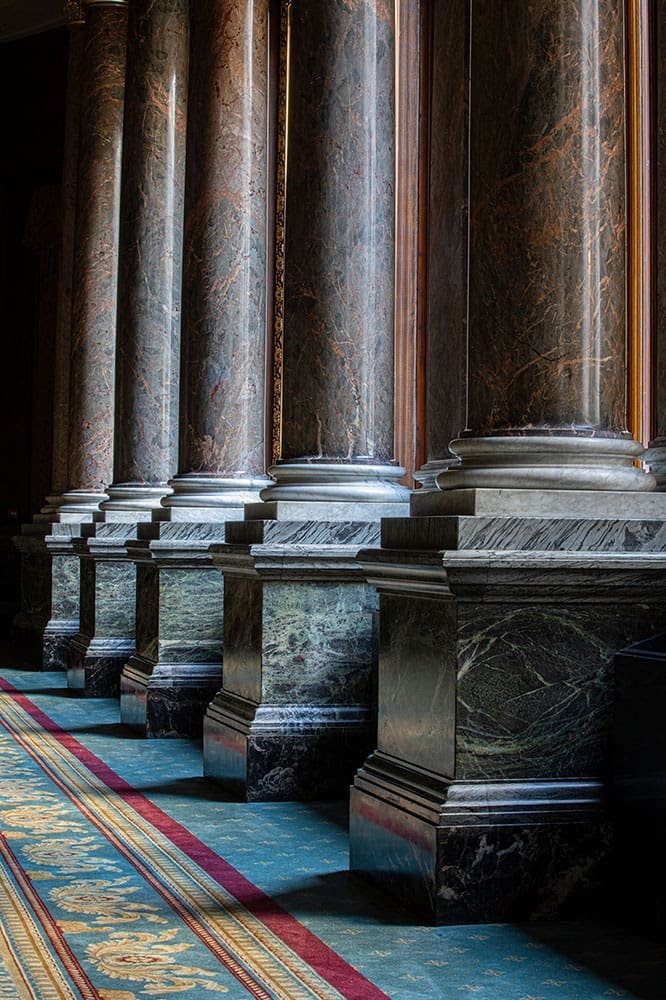
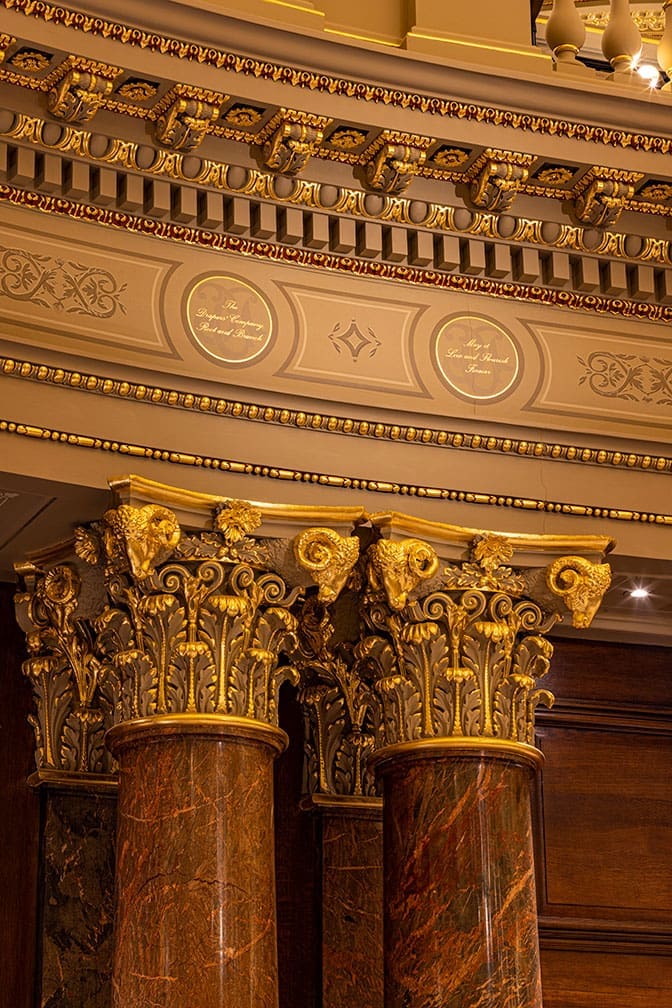
On the walls of this large room, set within an imposing range of marble columns, is a collection of royal portraits starting with the great baroque artist Sir Godfrey Kneller’s William III and running in sequence through to Harold Speed’s portrait of Edward VII.
A small part of the Company’s silver collection is on show here including mid-Victorian display pieces by Smith & Nicholson, and 17th century cups. To either side are two marble statues: Venus by John Gibson and Hypatia one of the three most important works by the colourful and controversial sculptor Richard Belt, the other two being Lord Byron, at Hyde Park Corner, and Queen Anne, in front of St Paul’s Cathedral.