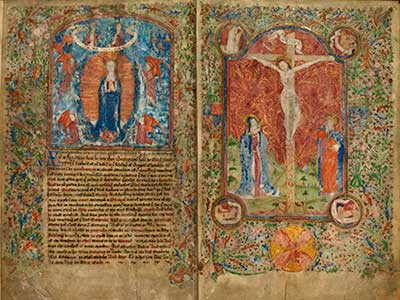
The precise origins of the Drapers’ Company are not clear. Whilst evidence of drapers working in the City can be found throughout the 13th century it is not until 1361 that formal recognition of the guild was awarded by the Mayor and the Brotherhood of our Lady of Bethlehem founded.
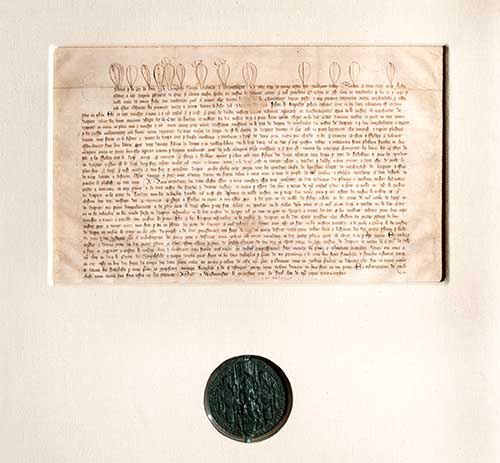
To fully secure their monopoly over the drapery trade in London, the guild petitioned for a Royal Charter which was granted by Edward III in 1364. By this they came to set pricing and trade standards such as the measure known as the "Drapers’ ell" by which all cloth was sold, and to oversee the training of apprentice drapers.
The expanding cloth trade in the 15th century gave the Drapers a powerful position in the City and in the 1420s, the guild decided to build its own hall rather than continue to meet in members’ houses, taverns or other guilds’ halls. The site chosen was in St Swithin’s Lane, money was raised from corporate funds and individual members, work began in 1425 and the first dinner was held in the Hall in 1430.
In 1438, the guild received its Charter of Incorporation recognising the guild as a perpetual legal corporate entity . The Charter stated that the Company now had the right to: ‘…unite, found, create, erect, and establish in the City one Gild or Fraternity in honour of the blessed Virgin Mary…and the same enjoy to them and their successors to all future times…’
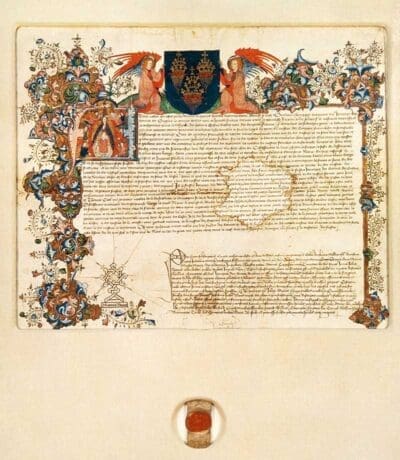
On receiving its Charter of Incorporation, the Company sought a coat of arms. This was granted by the Garter King of Arms in 1439 and was devised to symbolise the Company’s patron, the Blessed Virgin Mary.
‘Sisters’ are mentioned in the earliest surviving ordinances of 1371 and in the earliest surviving Wardens’ accounts of 1414-40. However, it is not until 1493 that the first Sister is mentioned by name: Elynore Sampton is listed as paying quarterage, a quarterly membership fee.
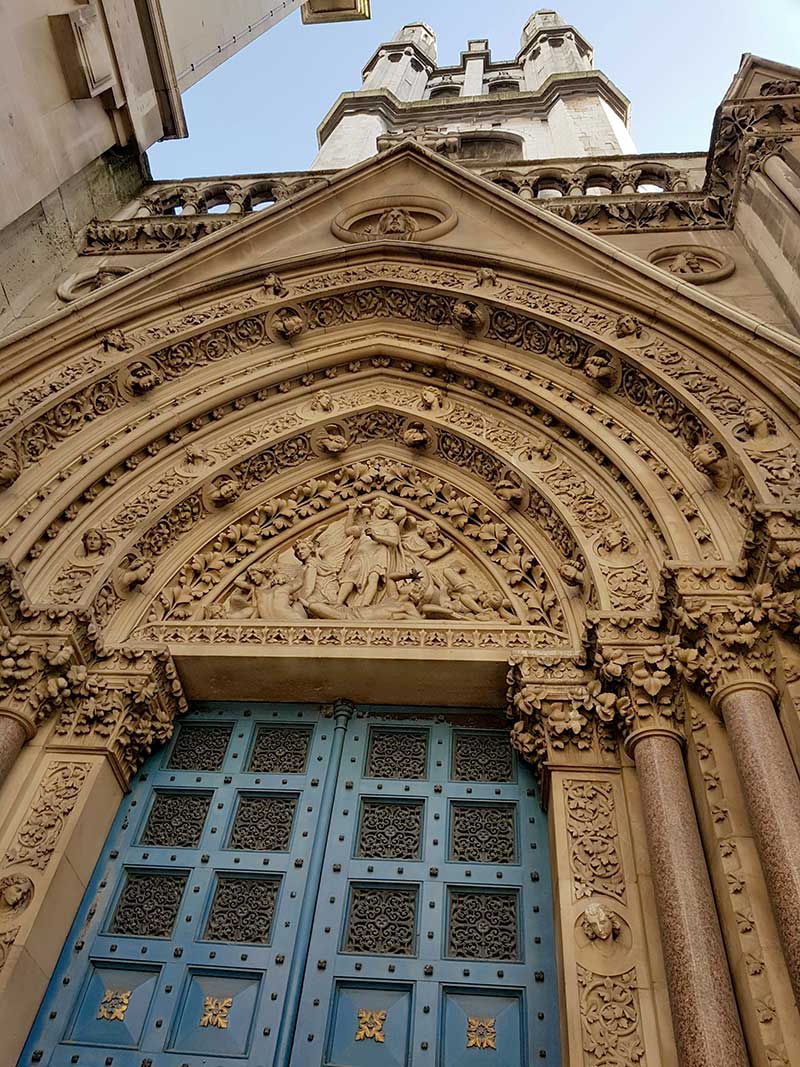
In 1503, the Company acquired the advowson, the patronage, of the church of St Michael in Cornhill. Having worshipped at the church at St Mary Bethlehem, and latterly at St Mary le Bow, the Company no doubt had sought a place of corporate worship where it held position and influence.
The first ordinances of 1371 stressed that if a member of the fraternity ‘fall into trouble by misfortune so that he have not the wherewithal to lie he shall be helped by the said Brotherhood’. This early commitment to philanthropy was enhanced by a growing trend of members entrusting their charitable trusts to the Company to provide for the poor of London. Bread, fuel and clothes were distributed but in 1508 almshouses are first mentioned in the Company’s archives when a tiler is paid for work at ‘the Almosemen houses’.
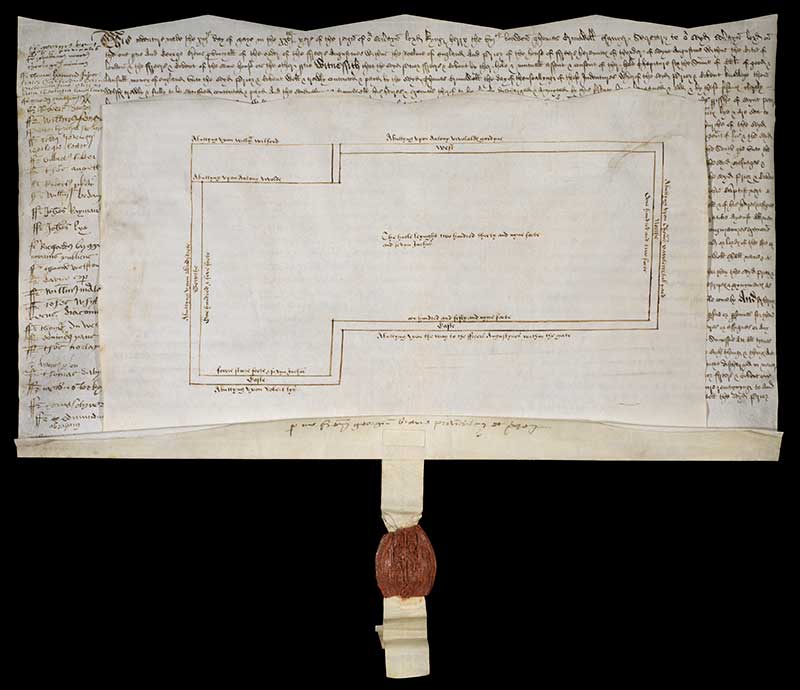
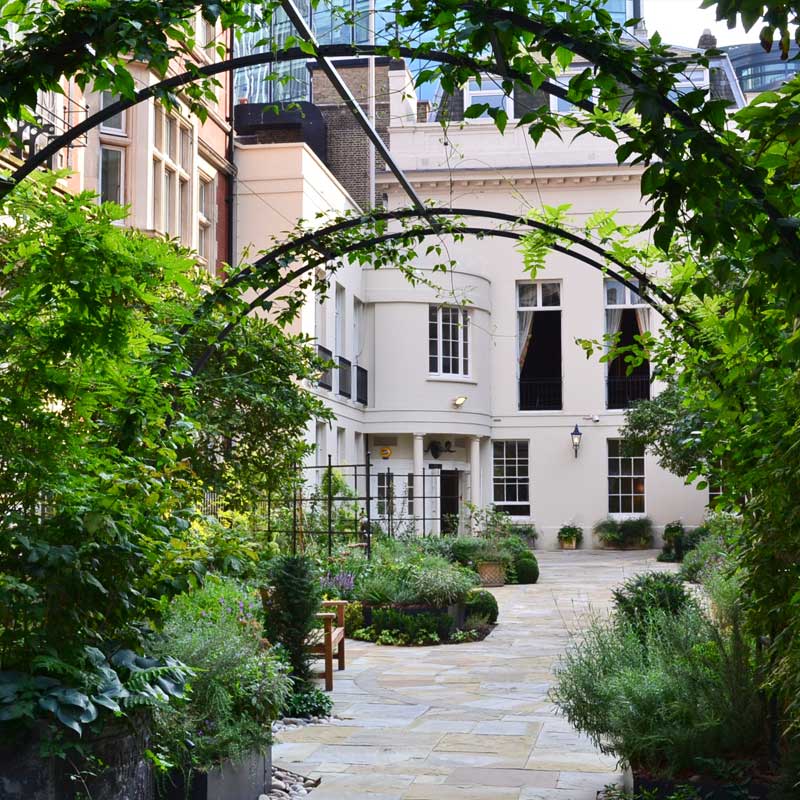
Negotiations for the purchase from Henry VIII of Thomas Cromwell’s former house were finally concluded in 1543 with the acquisition of the house and its garden for 1,800 marks (approximately £1,200). The old hall in St Swithin’s Lane was let.
Elizabeth I granted the Company an Inspeximus Charter confirming their rights and privileges.
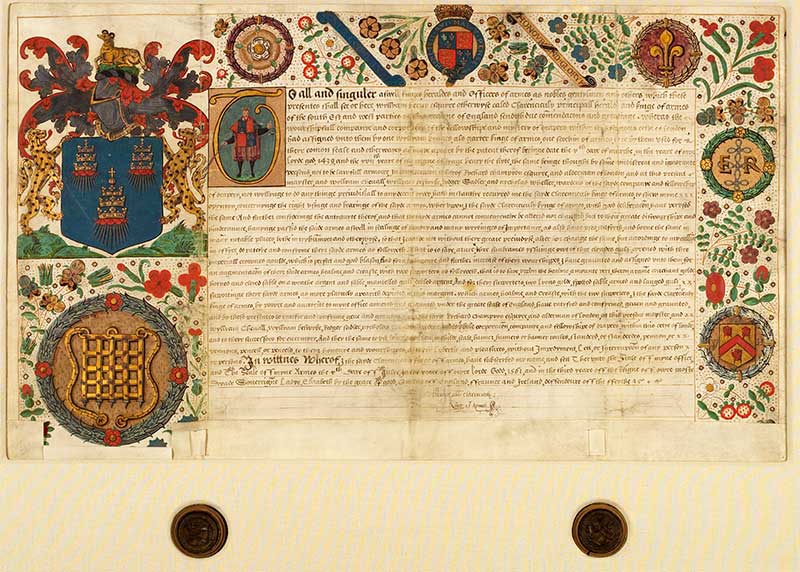
In 1561 the grant of arms was renewed with the addition of a helm and crest with a golden ram and two supporters in the shape of pelleted (black spotted), golden lions.
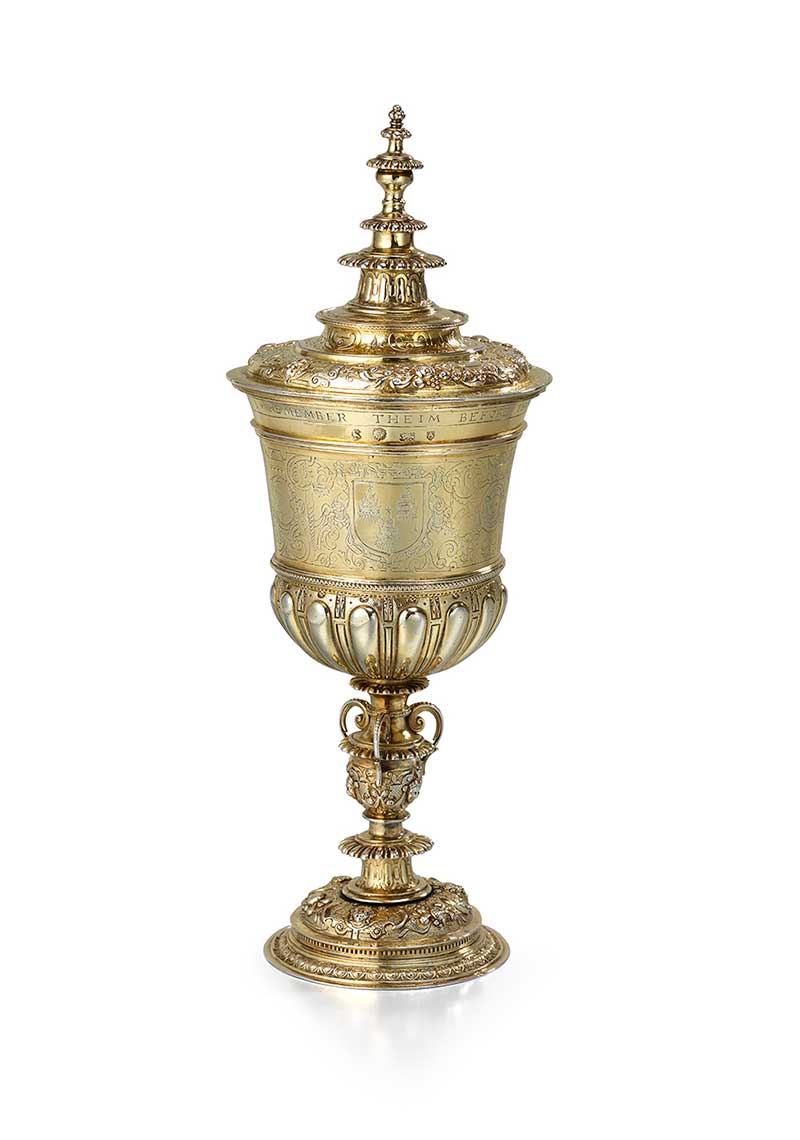
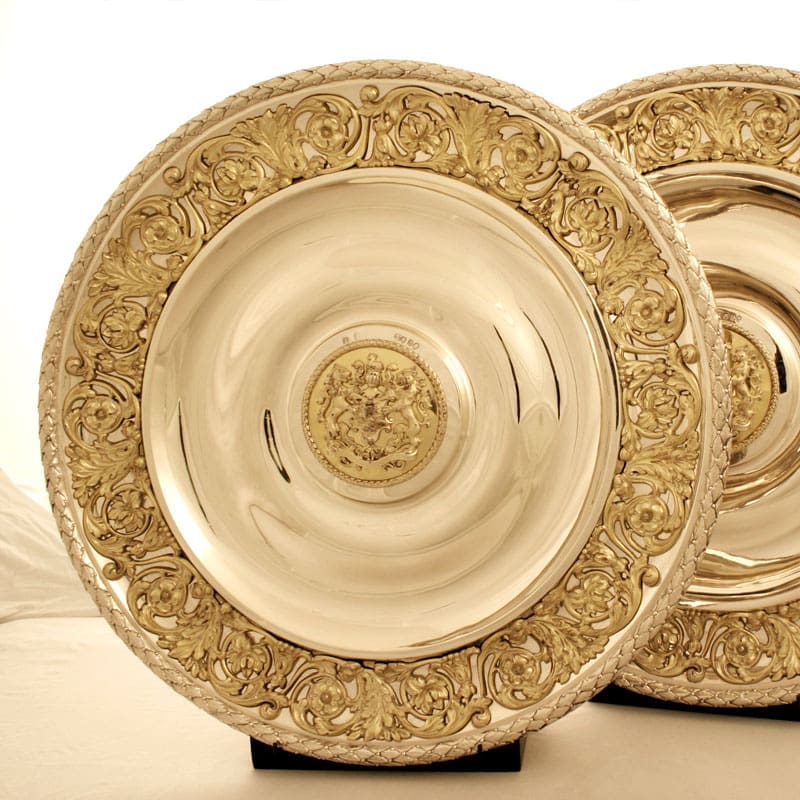
William Lambarde, antiquarian and lawyer founded almshouses in Greenwich, named Queen Elizabeth’s College and asked the Wardens of the Drapers’ Company to serve as Governors. In gratitude, in 1578, he presented the Company with a silver gilt, standing cup engraved ‘A proctour for the poore am I remember theim before thou dye’. Attributed to Affabel Partridge, goldsmith to Elizabeth I, the cup has come to symbolise the Drapers’ Company’s deep commitment to the art of giving and is placed before the Master when dining at the Hall as a reminder of this duty.
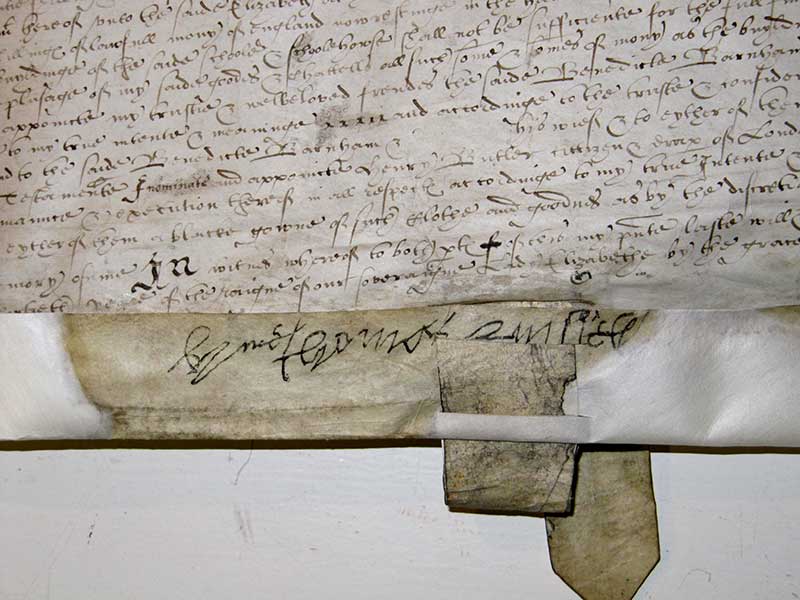
In 1593 the first school was entrusted to the Company’s care starting a tradition of supporting education that endures to this day. Thomas Russell decreed in his will that a free school be founded at Barton in Staffordshire with a Master and Usher selected by the Drapers’ Company and paid from an endowment of £21 a year.
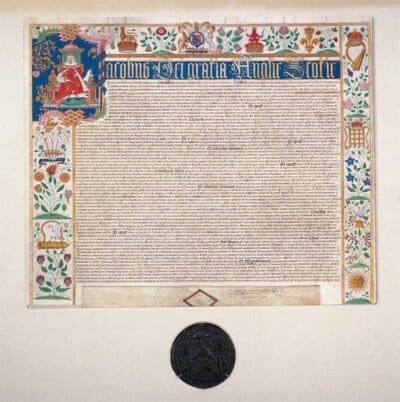
In 1607, James I granted to the Company a Charter of Reincorporation and it is this that still determines how the Drapers’ Company runs today.
In 1609 the Company became embroiled in two significant overseas initiatives: the plantations of Virginia and Ulster. Whilst the former merely entailed the subscription of funds to the Virginia Company, the latter led to the purchase of an estate and the establishment of an enduring relationship with the estate’s town, Moneymore, and ultimately with Draperstown, a market town developed by the Company in the 19th century.

In 1613, the Company’s Grant of Arms was confirmed and the motto ‘Unto God only be honour and glory’ was added to the arms.
The Great Fire of London swept through the City between 1st – 6th September 1666 destroying some four-fifths of the buildings in the City. Drapers’ Hall and around half of the Company’s 200 properties were destroyed.
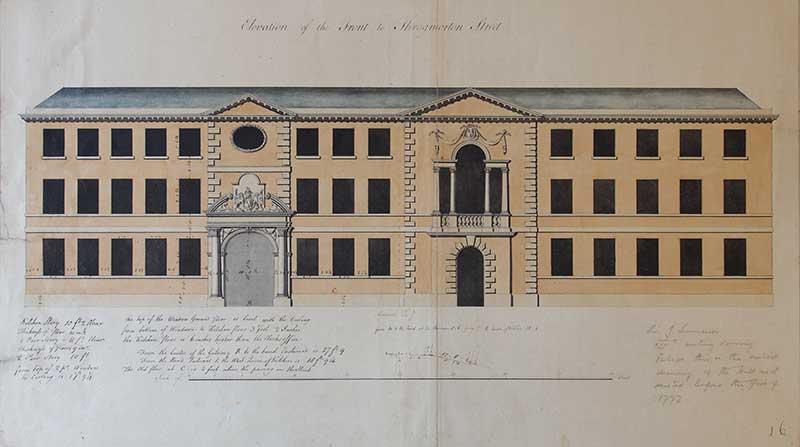
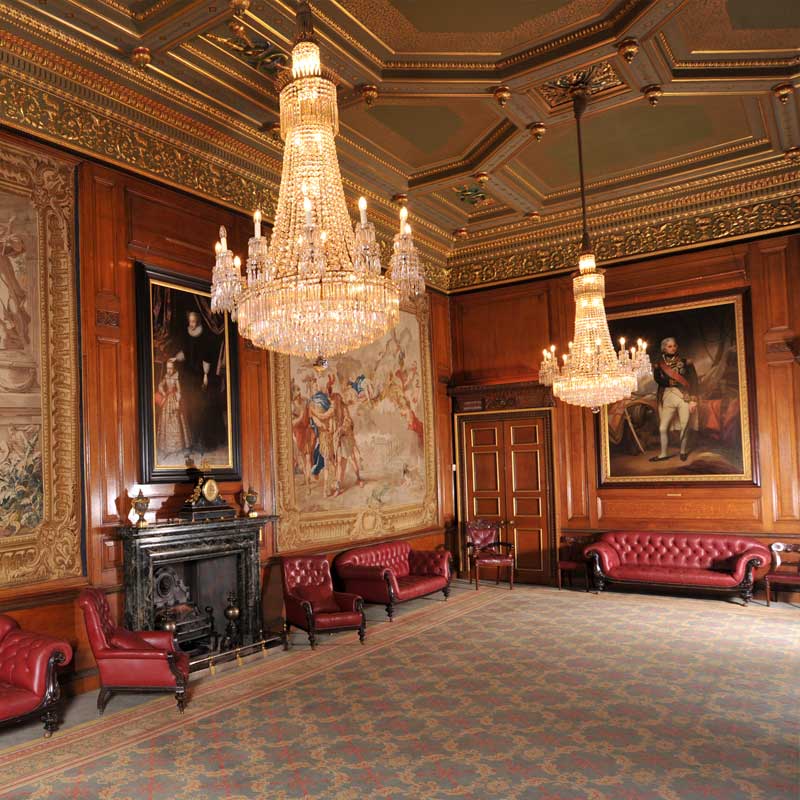
In November 1667, Edward Jarman’s plans for the new Hall were approved. In plan the new Hall followed the example of its predecessor with the main rooms grouped around a courtyard though incorporating a longer livery hall. The rebuilding of the Hall took several years during which time the Company hired Carpenters’ Hall, immediately adjacent to the garden, for its events. Work had finished by the end of 1671 though furnishing and adorning the rooms took far longer.
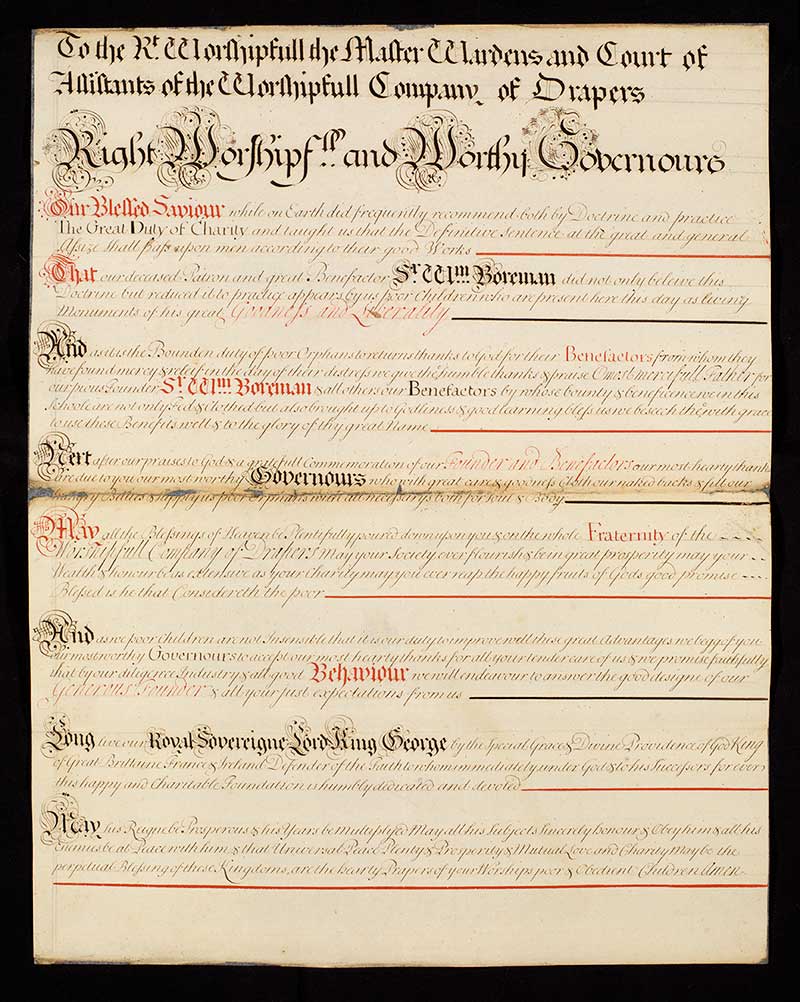
Sir William Boreman, a Clerk of the Green Cloth to Charles II, died in 1686 bequeathing to the Company the school he had founded in Greenwich.

In his will of 1728, Francis Bancroft left lands in Essex, Suffolk and London, and the residue of his personal estate, to the Drapers’ Company for the purpose of building a school for 100 boys and almshouses for 24 old men who were members of the Company. A five-acre site was acquired in Mile End Road where Bancroft’s School and Almshouses were opened in 1737.
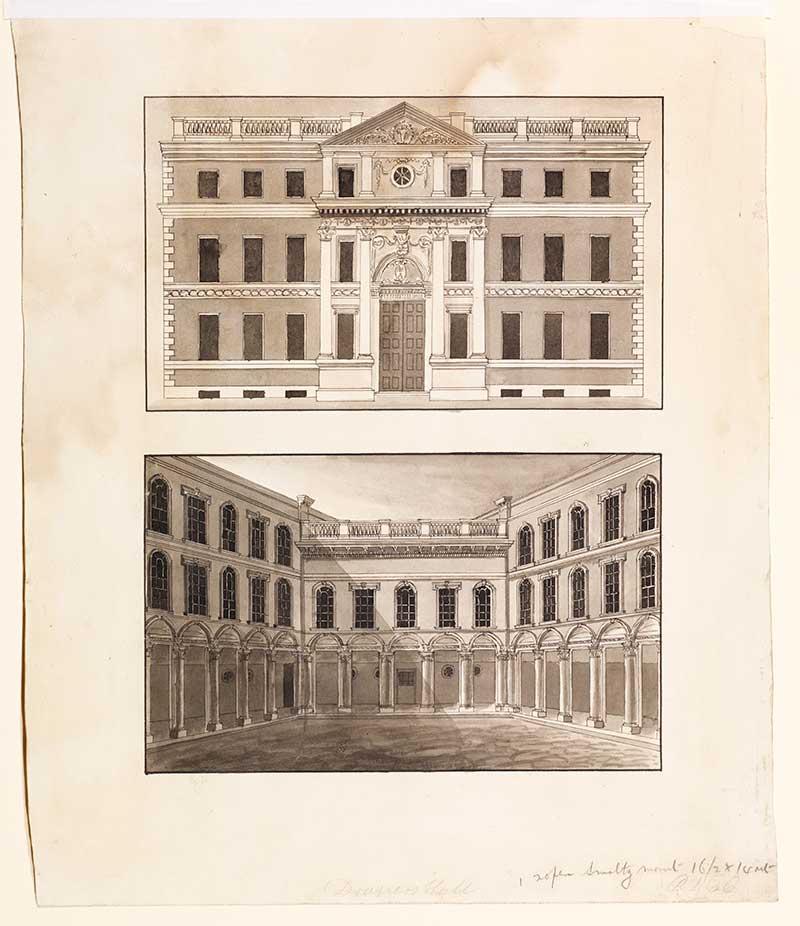
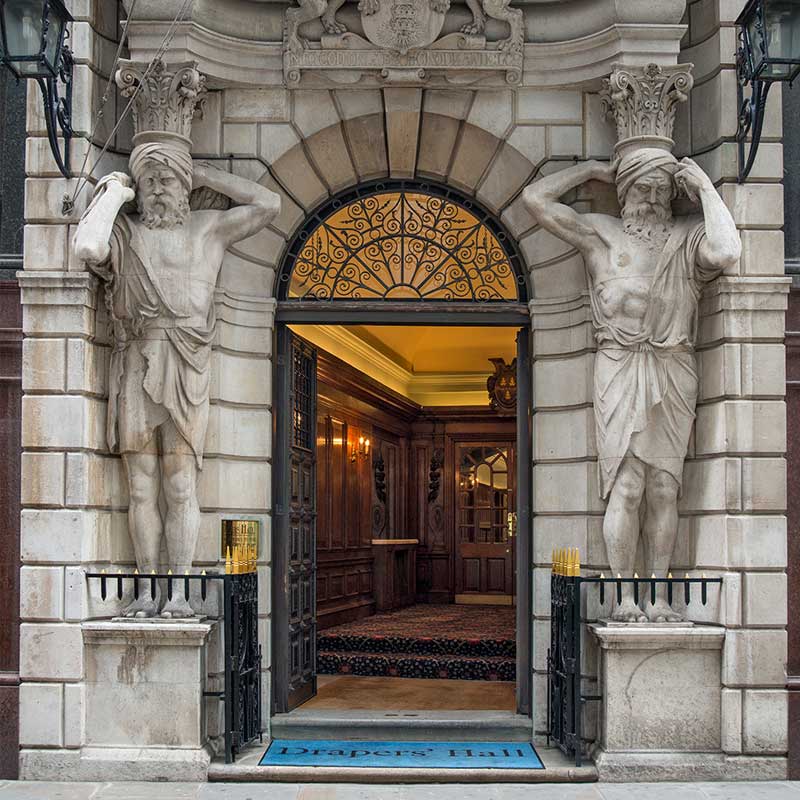
Just over a century after the rebuilding of Drapers’ Hall, fire struck again in 1772 causing considerable damage both to the building and its contents. The opportunity was taken to create a new frontage in Throgmorton Street and to transform the interior design of the rooms. However, the footprint of the previous Hall was retained centred around the Courtyard.
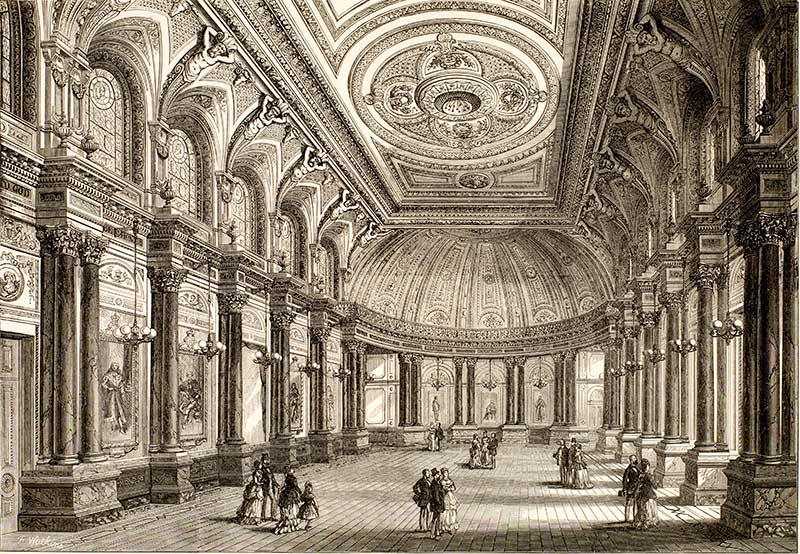
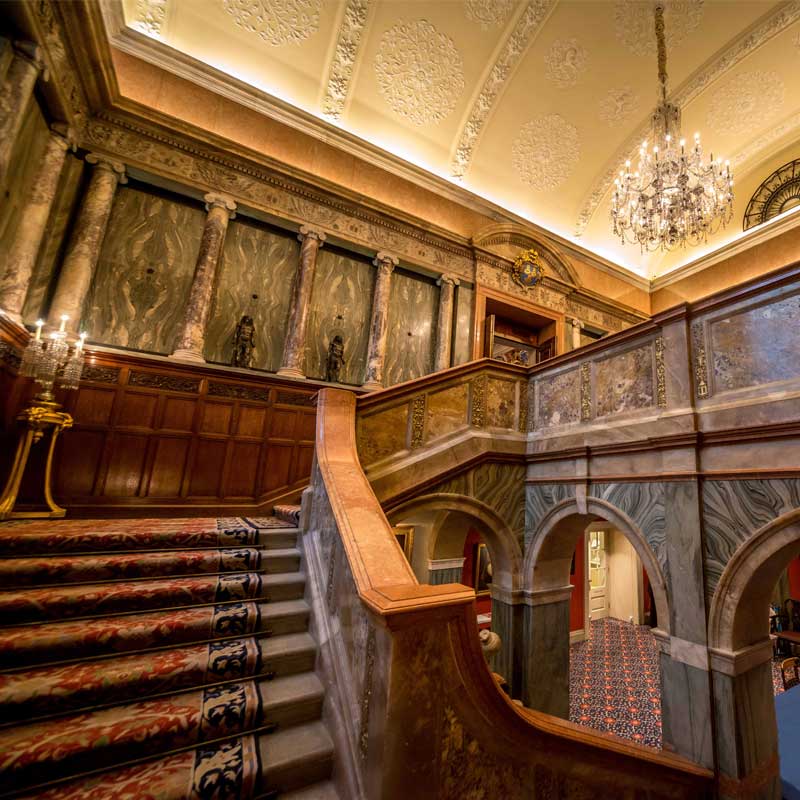
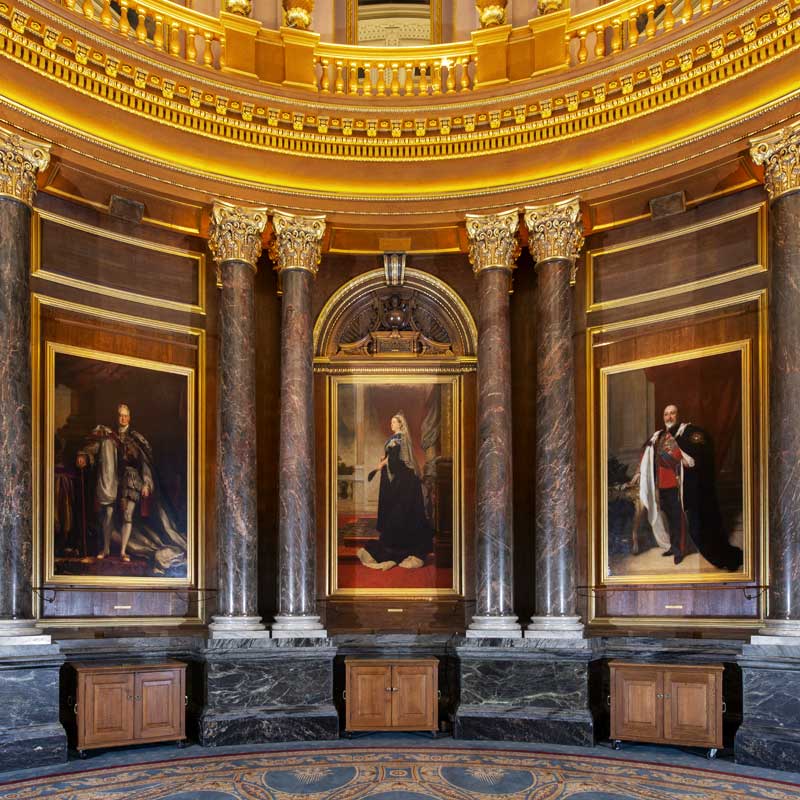
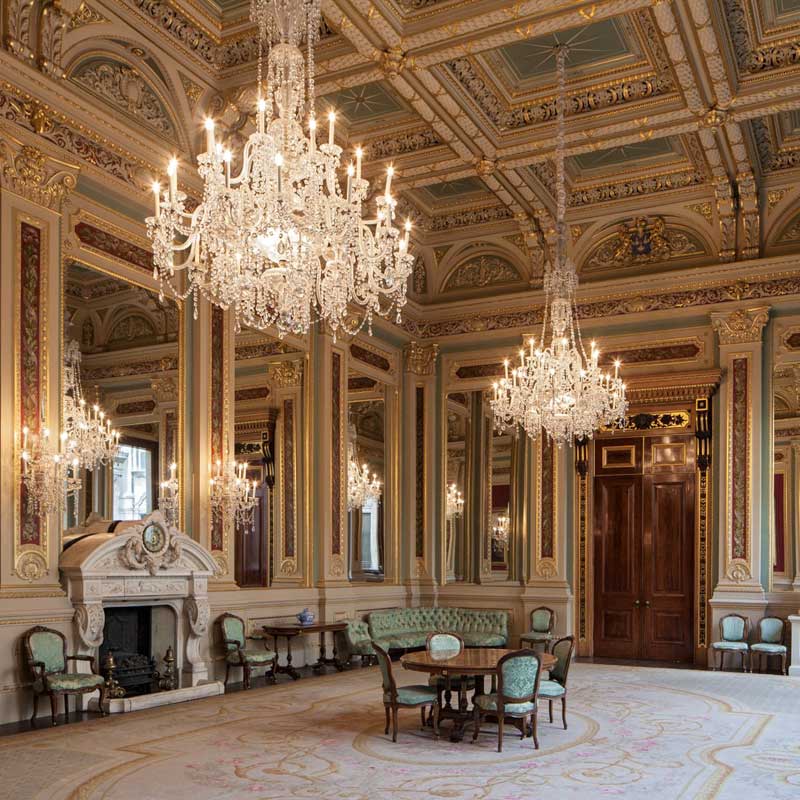
In 1866 a period of alterations and improvements at Drapers’ Hall was embarked on, conducted by the surveyor, Herbert Williams, and interior designers, John G Crace & Son. The Throgmorton Street frontage was changed again and the Courtyard rebuilt, the Livery Hall was further enlarged, a grand marble staircase was installed, and the decoration of individual rooms was transformed.
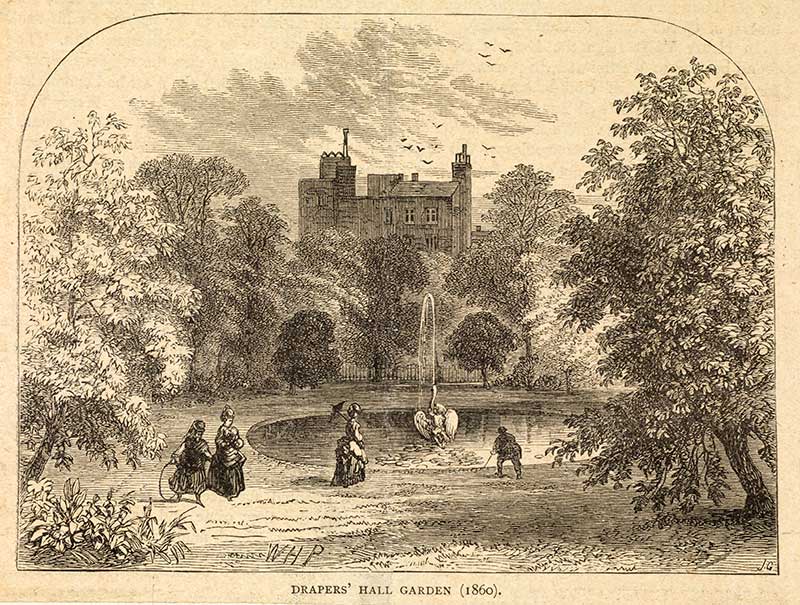
In 1873 planning began to lease the large garden adjacent to Drapers’ Hall for building and an agreement was made with the Carpenters’ Company to construct Throgmorton Avenue.
In 1878, the Company joined the City of London Corporation and 15 other livery companies in the foundation of the City & Guilds of London Institute. The Institute was devoted to the training of craftsmen, technicians and engineers. This began a Drapers tradition of grants for technical classes and the building of technical schools and laboratories around the country.
1878 also saw the move of three of the Company’s almshouses from Bow to Bruce Grove, Tottenham where they merged together to form Edmanson’s Close almshouses. The original three almshouses had been founded by Sir John Jolles in 1617; John Pemel in 1681 (for poor widows); and John Edmanson in 1703 (for decayed sailmakers and their widows).

In 1885, following the move of Bancroft’s School to Woodford, Essex, the school’s land in Mile End Road was sold for £22,400 and the People’s Palace built, an institute that aspired to improve the quality of life for the people of the East End of London through education and entertainment. The Company granted £20,000 towards the cost of technical schools within the Palace. By the end of the century the Company had granted a further £70,000 towards the development of these technical schools and had agreed to provide members for its governing council. The technical schools, now grown into Queen Mary University of London, continue to receive grants from the Company.
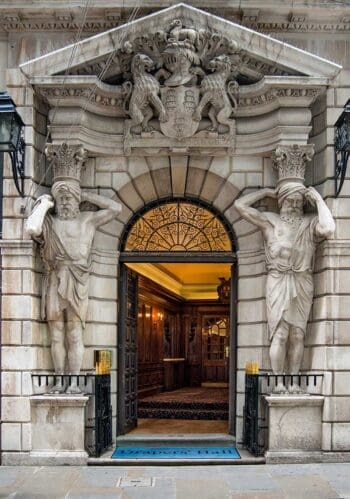
The next wave of major alterations to Drapers’ Hall began in 1897. The Court approved a radical plan to demolish and rebuild the entire Throgmorton Street frontage of the Hall, creating more room for offices to be let and the opportunity to alter the Livery Hall. It also resulted in the removal of the main staircase to a new location on the north-west of the Courtyard.
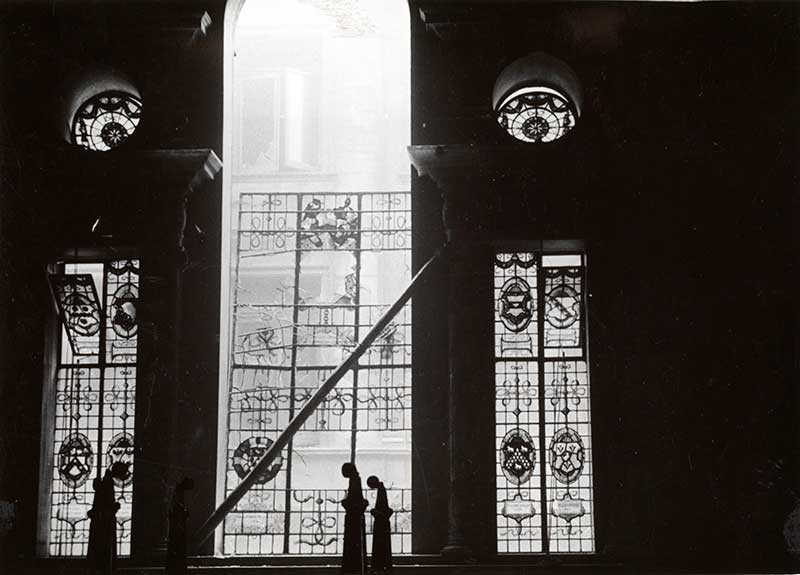
In October 1940 a land mine exploded on the Dutch Church in Austin Friars, destroying the church and causing much damage to neighbouring property including Drapers’ Hall. Thankfully, whilst many windows were blown out and ceilings fell, no-one was injured and no profound structural damage was caused.

HRH Princess Elizabeth, later Queen Elizabeth II, became a Draper in May 1947, following in the footsteps of her father who had become a Freeman of the Drapers’ Company in 1919.
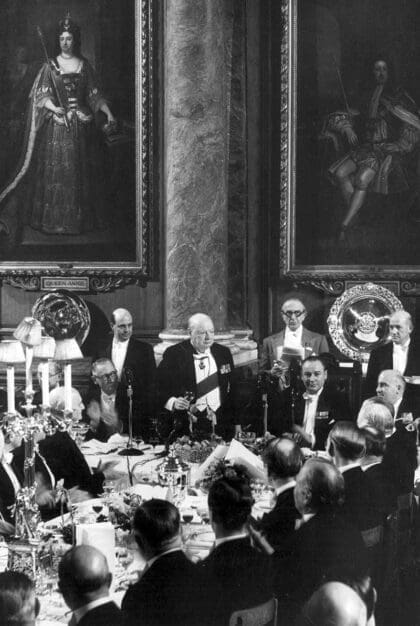
In 1955 the Company hosted a dinner given by the Trustees of Colonial Williamsburg in honour of Sir Winston Churchill. Out of this dinner grew a friendship between the Company and the College of William & Mary in Virginia and the establishment of an exchange scheme for law students at the College and Queen Mary University of London.
In 1959, the Drapers’ Charitable Fund was created to better administer the Company’s grant-giving. The Fund supports education and young people, social welfare, and textiles and heritage and its resources are growing all the time.

In 1961 almshouses founded in the 17th century by John Walter in St Mary Newington near the Elephant and Castle were moved and rebuilt in Brandon Street, Southwark. They were extended 10 years later to accommodate the residents from John Walter’s second almshouse in Glasshill Street. Today, the almshouses are known as Walter’s Close.
To celebrate its sexcentenary in 1964, the Company made significant grants amounting to £250,000 to a carefully selected number of charitable projects including the Field Studies Council leading to the creation of the Drapers’ Field Centre in Betws-y-Coed, Wales. A Supplemental Royal Charter too was obtained.
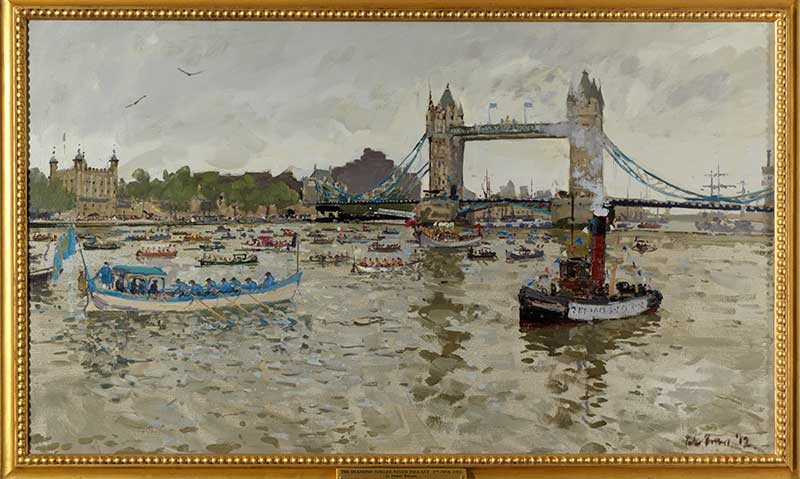
In 2003 the Company purchased of a barge, The Royal Thamesis. It is regularly used at a variety of occasions including the annual Countryside Live event on the River Lee and ad hoc events such as Queen Elizabeth II’s Diamond Jubilee River Pageant and the Vogalonga in Venice. The barge is managed by the Bargemaster, selected by the Court from the Livery, and run in partnership with the charity, City Barge.
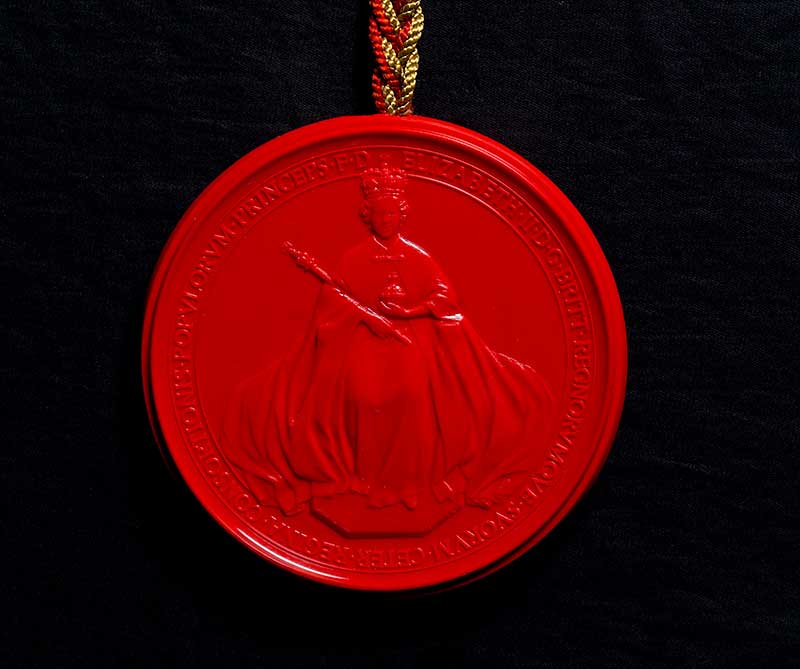
In 2008 the Company was granted a fifth Supplemental Charter providing various amendments to the previous Charters. The final clause is the power to amend which means that it will not be necessary for the Company to ever again seek a new or Supplemental Charter. They will merely have to seek agreement for changes from the Privy Council.

In 2010, the Company began a new educational venture. Together with academics and educational leaders from Queen Mary University London, it built a new academy school, Drapers’ Academy in Harold Hill.. New buildings for the school were opened by HM The Queen in 2012. The Company’s on Harold Hill has expanded and today it has a close and flourishing relationship with Drapers’ Multi-Academy Trust where it provide governors, funding, mentoring and career advice to the pupils at Drapers’ Academy and four local infant and primary schools.
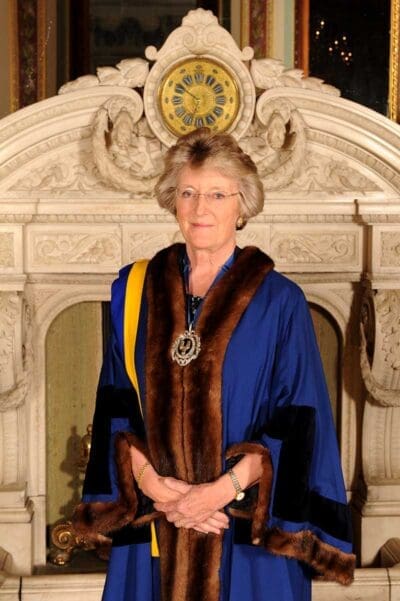
Women have been apprenticed through and become Freemen of the Company since its foundation in the 14th century. However, it was not until 2001 that women gained equal rights of membership to their brethren Drapers including the right to apply to become Liverymen and to be considered for election on to the Court of Assistants. Lady Victoria Leatham DL, was elected Master in 2012, the first female to be elected to that office.
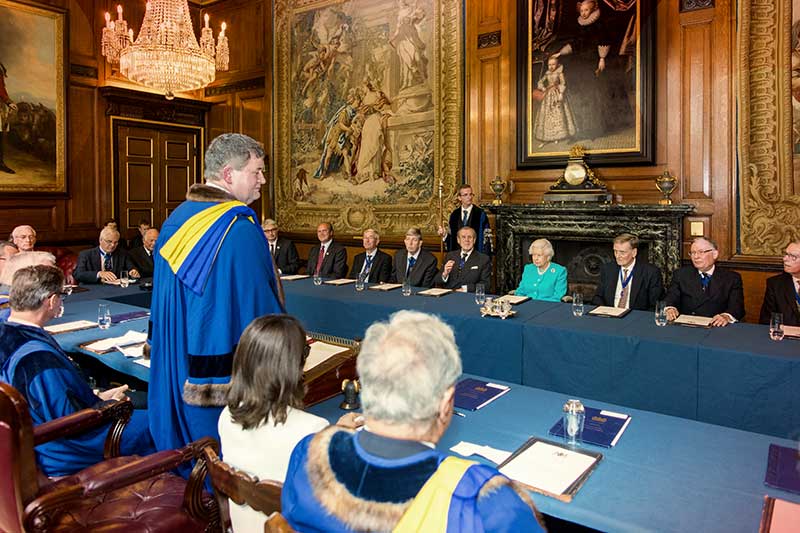
In 2017 the Company celebrated the 70th anniversary of HM The Queen becoming a member of the Company. At a special Court of Assistants, which Her Majesty attended, The Queen was elected an Assistant of the Court
In 2019 the Company celebrated the 25th annual concert series, initiated and organized by Past Master Sir Nicholas Jackson Bt being a showcase for talented students from the five music conservatoires supported by the Company through the granting of postgraduate scholarships.
The Covid-19 pandemic induced much change to the workings of the Company with many of the routine activities, in particular meetings, being conducted over Zoom and Microsoft Teams. Whilst the Charities Committee focused its attention on targeting charities where grants would be most impactful, the Company joined forces with other City livery companies to provide practical support in the form of meals to London’s NHS staff working on the Covid-wards and to vulnerable families.